Which Sleeves and Toploaders Protect Your Hockey Cards Best?

A single drop of condensation or a microscopic scratch can strip 90% of a card's market value in seconds. While many collectors focus on the high-stakes world of grading and auction-house sales, they often overlook the most basic layer of defense: the physical housing. Choosing the wrong way to store a card doesn't just risk damage; it can actually cause long-term issues like surface clouding or edge chipping if the materials aren't chemically stable.
This guide examines the specific materials and physical properties you need to look for when shielding your collection. We'll look at the chemistry of plastics, the thickness of rigid holders, and why your choice of storage can be the difference between a pristine gem and a worthless piece of cardboard.
What is the difference between PVC and PVC-free sleeves?
The most dangerous mistake a collector can make is using cheap, non-acid-free sleeves. Many budget-friendly sleeves found in big-box stores contain PVC (Polyvinyl Chloride). PVC is a nightmare for trading cards because it releases plasticizers over time—those chemicals that make the plastic bendable. These chemicals eventually leach out, creating a greasy film on your card's surface and, in many cases, permanently bonding the card to the sleeve. You'll see this most often with vintage cards or cards with high-gloss finishes.
When you're shopping, look for these terms: Polypropylene, Polyethylene, or Polyester. These are "archival safe" and chemically inert. If a product doesn't explicitly state it is PVC-free or acid-free, don't risk your high-end rookie cards in it. You can check the material standards through technical resources like the Archival Quality standards to ensure you aren't buying a slow-acting chemical trap for your collection.
Common Storage Materials Compared
Understanding the hierarchy of protection helps you decide where to spend your money. Not every card needs a thick plastic slab, but every card needs a safe environment.
- Penny Sleeves: These are thin, flexible sheets (usually polypropylene). They are perfect for preventing surface scratches during handling, but they offer zero structural support.
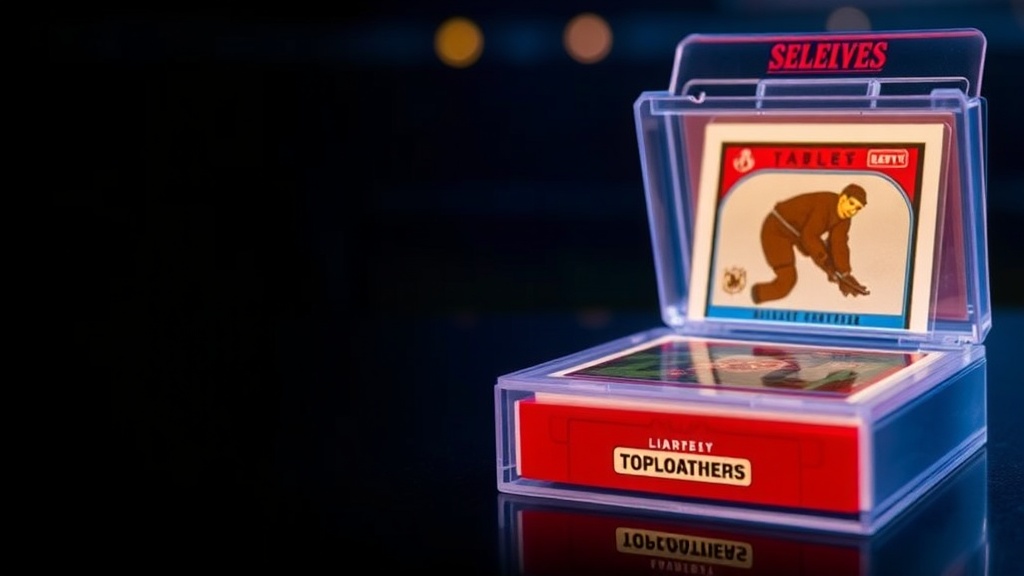
- Toploaders: These are rigid, single-thickness plastic holders. They provide excellent protection against bending and are the standard for most modern card-to-card transactions.
- Semi-Rigid Holders: Often used for cards that are slightly thicker or more prone to bending, these offer a middle ground between a sleeve and a toploader.
- Magnetic Card Holders (One-Touch): These are the gold standard for display. They use a rigid frame and a magnetic closure to create a high-end, airtight environment.
Do toploaders cause card warping over time?
It's a common observation in the hobby: a card looks perfect in a toploader, but after a year, it develops a slight curve. This often happens due to humidity and pressure. If you stack too many toploaders in a heavy box, the weight can actually bow the plastic. Beyond that, if the card is stored in a way that allows moisture to penetrate, the cardboard fibers will expand and contract, leading to warping.
To prevent this, never store your cards in a way that creates uneven pressure. If you're keeping a collection in a binder, ensure the rings aren't squeezing the pages too tightly. If you're using toploaders, try to keep them in a vertical position rather than stacking them horizontally in a heavy pile. This minimizes the constant gravitational pressure on the card surface. For more detailed technical advice on environmental control, the Conservation Center often provides insights into how environmental factors affect paper-based collectibles.
How much thickness is needed for high-value cards?
If you're holding a thick, modern jersey card or a thick cardboard-heavy vintage card, a standard 35pt toploader might feel tight. If a card is forced into a holder that is too small, the edges can suffer from "crimping" or "chipping." This is a permanent physical defect that drops the grade immediately.
The thickness (measured in points) is vital. A standard trading card is usually around 20-30pt. If you have a thick patch card, you should be looking at 50pt or even 100pt holders. Using a 35pt toploader for a card that wants to be 50pt is a recipe for broken edges. Always check the thickness of your card before buying the holder. It’s a small detail, but it’s the difference between a safe arrival and a damaged shipment.
When building a collection, think of these layers as a defensive system. A penny sleeve provides the first layer of surface protection. The toploader provides the structural protection. The outer box or storage container provides the environmental protection. If one layer fails, the others are there to catch the error. Don't settle for the cheapest option when the long-term health of your collection is at stake.