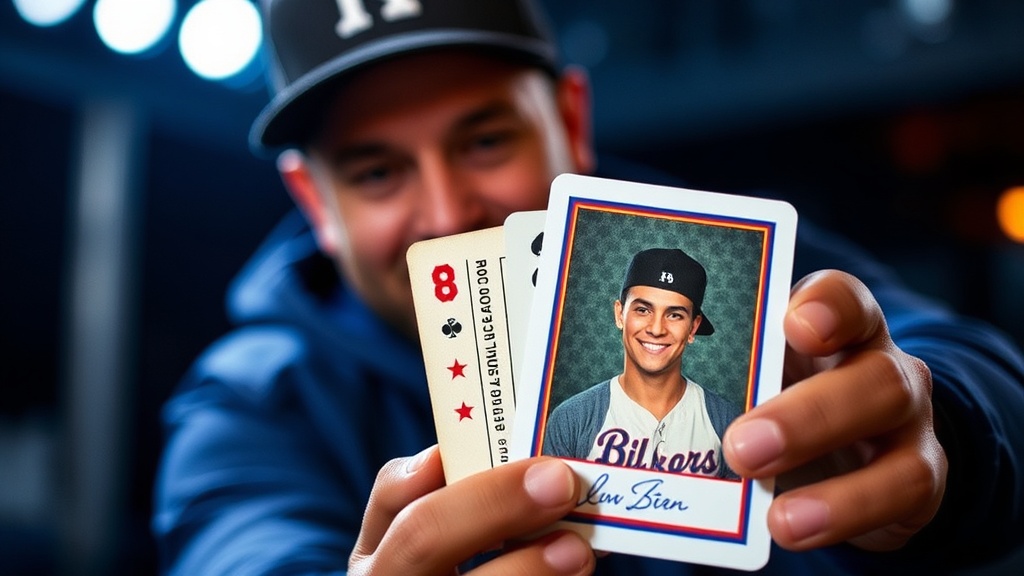
What Separates a Legitimate Rookie Card from a Clever Counterfeit?

Why Are Counterfeit Hockey Cards Flooding the Market Right Now?
The sports card industry crossed $20 billion in market value last year — and where there's money, there are fakes following close behind. Counterfeit hockey cards have evolved from obvious printer knockoffs to sophisticated replicas that fool even experienced collectors. The problem isn't just affecting vintage Wayne Gretzky rookies anymore. Modern cards — particularly high-end products from Upper Deck and limited autographed patches — are being duplicated with alarming accuracy. For collectors building serious collections or making investment purchases, knowing how to distinguish authentic cards from convincing frauds isn't optional — it's the price of admission.
The counterfeiters have gotten smarter. They're not just printing blurry copies on cheap cardstock anymore. Today's fakes use similar printing techniques, comparable card stock weights, and even replicated holographic elements. Some operations are so sophisticated they purchase authentic cards specifically to study their construction. This arms race means collectors need more than a magnifying glass and good lighting — they need systematic knowledge of what separates genuine articles from expensive mistakes.
Which Printing Details Reveal a Card's True Origin?
Authentic hockey cards from licensed manufacturers follow consistent production standards that counterfeits struggle to replicate perfectly. The first place to examine is the card face itself. Legitimate cards use specific printing processes — typically offset lithography for base cards and more complex techniques for premium inserts. Under magnification (a jeweler's loupe or even a quality phone macro lens works), authentic cards show distinct dot patterns in their color fields. Counterfeits often display irregular dot patterns, blurred edges where colors meet, or visible pixelation that genuine production doesn't produce.
The card back matters just as much. Manufacturers embed specific security features — microprinting along borders, precise color matching that shifts under different lighting, and texture patterns you can feel with a fingernail. Fake cards frequently miss these details or approximate them poorly. The text on counterfeit backs often appears slightly fuzzy or shows font inconsistencies when compared directly to known authentic examples. Cross-referencing suspected cards against verified examples from the same set — available through resources like PSA's card database — quickly reveals these discrepancies.
Card stock weight and composition present another verification opportunity. Authentic cards from specific eras use consistent materials — 1980s O-Pee-Chee cards have a distinct feel, modern Upper Deck products use proprietary cardstock formulations. Counterfeits often feel wrong — too stiff, too flimsy, or lacking the subtle texture of genuine articles. Experienced collectors develop an almost intuitive sense for this, but beginners can use digital scales to verify. Most standard hockey cards weigh between 1.5 and 2.5 grams. Significant deviations suggest either counterfeits or altered cards.
How Do Surface Textures and Finishes Expose Fakes?
Modern hockey cards employ sophisticated surface treatments that counterfeiters struggle to duplicate convincingly. Chrome and refractor finishes — those rainbow-shifting surfaces popular in premium products — require specialized manufacturing equipment that illegal operations rarely possess. Authentic refractors display smooth, consistent color shifts as you tilt the card under light. Counterfeit versions often show blotchy transitions, visible printing lines, or surfaces that feel slightly gritty rather than glass-smooth.
Autographed cards present particular challenges. On-card autographs — where the player signed directly on the card surface — should show ink penetration into the cardstock. Hold the card at an angle to the light; genuine autographs often display slight ink pooling at stroke edges and subtle impressions where the pen pressed into the paper. Counterfeit autographs typically sit flat on the surface, lacking this dimensional quality. For sticker autographs (where the signature appears on a clear or silver sticker affixed to the card), verify that the sticker edges align properly and the adhesive hasn't yellowed prematurely — signs of tampering or replacement.
Texture elements like embossed logos, raised lettering, and die-cut windows also reveal authenticity. Run your finger lightly across these areas. Authentic embossed elements have crisp edges and consistent depth. Counterfeit embossing often feels softer, less defined, or shows irregular pressure patterns. Die-cut windows — those precisely cut openings in some insert cards — should have clean edges without fraying or paper pulling. Jagged or uneven cuts suggest either counterfeits or poorly handled authentic cards whose value is compromised regardless.
Where Should You Verify Card Authenticity Before Purchasing?
Even experienced collectors need external verification for significant purchases. Professional grading services — PSA, BGS, SGC — employ teams specifically trained to identify counterfeits. A card encased in their holders carries authentication assurance, though even these services occasionally miss sophisticated fakes. For raw (ungraded) cards, cross-reference against known authentic examples through multiple sources. Beckett's price guides and online databases provide reference images, though database comprehensiveness varies by set and era.
Collector communities serve as valuable verification resources. Forums like those at Blowout Cards and Sports Card Radio maintain threads specifically for counterfeit identification, where experienced collectors share newly discovered fake varieties and authentication techniques. Social media groups dedicated to specific sets or players often include members with deep expertise in particular niches. When purchasing high-value cards, consider requesting seller-provided photos of specific details — serial numbers on limited cards, hologram patterns, particular surface areas — and share these with community experts for verification.
Purchase provenance matters significantly. Cards from reputable dealers with established authentication processes carry lower counterfeit risk than unknown eBay sellers or marketplace strangers. Ask questions about acquisition history — where did the seller obtain this card? Do they have original purchase documentation? While not all legitimate sellers maintain detailed records, evasive answers or unrealistic stories ("found in my grandfather's attic — he worked for the card company") warrant increased scrutiny. Remember: the "too good to be true" price almost always signals a too-good-to-be-true card.
What Red Flags Should Trigger Immediate Skepticism?
Certain warning signs should halt any potential purchase immediately. Sellers who refuse detailed photo requests, avoid direct questions about authenticity, or pressure buyers toward quick decisions are operating suspiciously. Legitimate sellers of valuable cards understand authentication concerns and accommodate reasonable verification requests. Similarly, listings using stock photos rather than images of the actual card deserve scrutiny — though some high-volume sellers legitimately use stock images, this practice obscures condition and authenticity details.
Price disconnects represent another major red flag. A Connor McDavid Young Guns rookie selling for 60% below market rate isn't a lucky find — it's almost certainly fake, altered, or stolen. Counterfeiters price aggressively to move inventory quickly, exploiting buyer greed. Research current market values through completed sales on eBay, PWCC Marketplace, and Heritage Auctions before any significant purchase. Understanding realistic price ranges protects against both counterfeit cards and legitimate cards in worse condition than advertised.
Documentation claims require verification. Certificates of authenticity from unknown companies, generic "guaranteed authentic" statements without backing, and references to vague "professional authentication" should prompt deeper investigation. Legitimate third-party authentication comes from recognized grading companies or manufacturer verification programs — not from self-issued certificates or unknown "authentication services" created to lend false credibility to fake merchandise. Always verify that mentioned authentication services actually exist and are recognized within the collecting community.
The counterfeit problem won't disappear — profit motives ensure continued operation. But informed collectors protect themselves through knowledge, verification practices, and healthy skepticism. Every authentic card in your collection represents not just player achievement or investment value, but successful navigation of a marketplace where deception constantly evolves. That expertise — the ability to distinguish genuine articles from sophisticated fakes — separates serious collectors from casual participants, ensuring your collection maintains both its integrity and its worth.