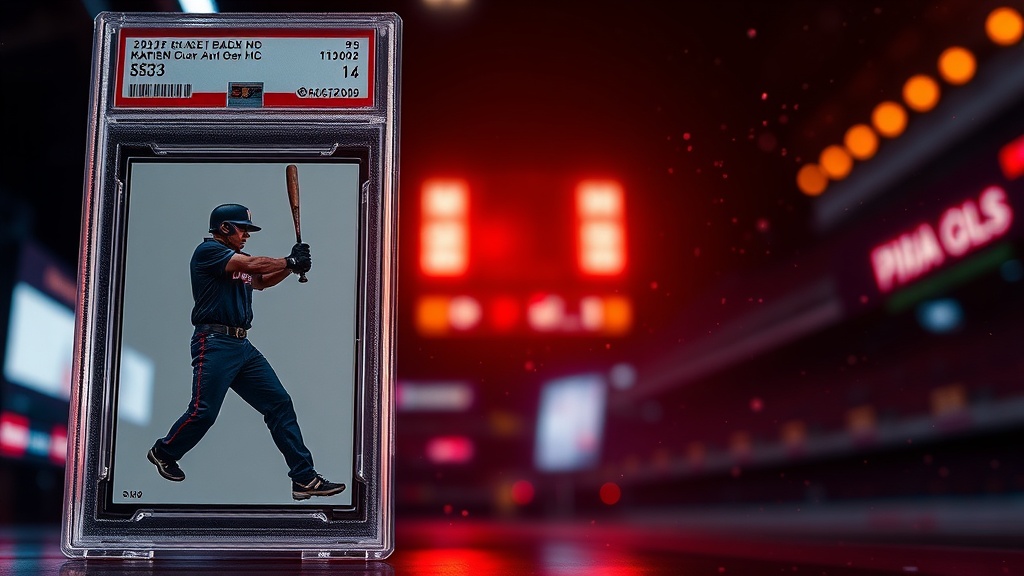
Should You Crack Your BGS 9.5 and Chase a PSA 10?

Most collectors assume PSA 10 always beats BGS 9.5 on resale value—that the math is simple and the choice obvious. It isn't. While PSA 10s frequently command premiums in the hockey card market, the gap between a strong BGS 9.5 (four 9.5 subgrades) and a PSA 10 varies wildly depending on the set era, player profile, and current registry competition. Sometimes the BGS 9.5 actually outperforms. Other times, you're looking at a 40% or higher premium for that PSA 10—enough to justify the risk, fees, and waiting period of a crossover submission.
Understanding when to crack a slab and resubmit isn't about following hype. It's about reading population reports, tracking recent sales, and knowing how each grading company evaluates hockey cards specifically. The collectors who treat this as a strategic decision—rather than an emotional one—consistently extract more value from their collections.
How Do PSA and Beckett Actually Grade Hockey Cards Differently?
PSA evaluates cards on a 10-point scale weighing centering, corners, edges, and surface into a single final grade. They don't publish subgrades for standard submissions (though they recently introduced them for some service tiers), meaning you're buying the number on the label without granular breakdown of why that card earned that grade. Beckett—specifically BGS—uses a four-subgrade system that assigns individual scores for centering, corners, edges, and surface, then calculates an overall grade based on a weighted formula.
Here's where it gets interesting. A BGS 9.5 Gem Mint requires stricter standards in some respects than a PSA 10. For a BGS 9.5, you're typically looking at three 9.5 subgrades and nothing below a 9.0—or some variation that averages to 9.5 under their formula. That level of consistency often means the card is sharper than a PSA 9, and in many cases, competitive with a PSA 10. Yet market psychology frequently values the PSA 10 higher, creating arbitrage opportunities for collectors willing to play the crossover game.
Centering standards diverge notably between the companies. PSA generally allows up to 60/40 centering on front for a Gem Mint 10, while Beckett is stricter—often requiring 55/45 or better for equivalent grades. This means a card that barely squeaks into PSA 10 territory might not even hit BGS 9.5 if centering is marginal. Conversely, a BGS 9.5 with strong centering subgrades has excellent odds of crossing to PSA 10, assuming the other attributes hold up.
Surface evaluation also varies. PSA graders examine cards under controlled lighting for scratches, print lines, and wax stains. They're generally more forgiving of minor surface issues on vintage cards where manufacturing limitations existed. Beckett's surface subgrade can torpedo an overall grade even when the card looks pristine to the naked eye. Modern cards from Upper Deck—particularly the glossy Young Guns series—are notorious for factory surface imperfections that show up under magnification but remain invisible in hand.
When Does Crossover Grading Actually Make Financial Sense?
The math isn't complicated, but collectors often overlook half the variables. Start with the current market spread—what does a BGS 9.5 sell for versus a PSA 10 in the same card? Subtract your costs: grading fees, shipping with insurance both ways, and the value of your time during the submission window. Don't forget the risk of a lower grade—if your BGS 9.5 comes back PSA 9, you've likely lost money even before accounting for the effort involved.
Modern cards—particularly rookie cards from 2005 onward—often show the widest PSA 10 premiums. A Connor McDavid Young Guns BGS 9.5 with four 9.5 subgrades might trade at $800, while the PSA 10 version commands $1,400. That's a $600 spread. Subtract $100-150 in crossover costs, and you're looking at meaningful profit if the gamble pays off. But vintage cards tell a different story. A 1979-80 O-Pee-Chee Wayne Gretzky rookie in BGS 7 often sells comparably to PSA 7—the crossover incentive simply isn't there unless you're chasing registry set inclusion.
Registry competition drives significant crossover activity. PSA's Set Registry program has dominated the hockey card space for years, creating concentrated demand for PSA-graded cards among competitive set builders. Beckett offers their own registry, but the participation levels and prestige haven't matched PSA's ecosystem. This dynamic means PSA 10s often carry "registry premiums" that exceed their raw condition advantage—collectors aren't just buying the card, they're buying points toward leaderboard rankings.
Timing matters enormously. Grading backlogs fluctuate based on submission volume, and so do turnaround times. A card submitted during the post-holiday rush might sit for months, while the same card submitted in July could return in weeks. During extended waits, market conditions shift—players get hot, prices spike, or corrections hit. You're not just betting on the grade; you're betting on market stability during the submission window. Some collectors mitigate this by using bulk crossover services that maintain standing submissions, though these arrangements come with their own fee structures.
What Cards Should You Never Cross Grade?
Certain cards carry disqualifying factors that make crossover attempts foolish. Vintage cards with provenance—original owner markings, team set assemblies, or documented history—often lose narrative value when stripped from their context. The slab is part of the story. Cards with borderline grades that barely achieved their current rating face disproportionate downgrade risk. And anything with existing holder damage—cracked cases, scratched slabs, or compromised labels—requires extreme caution since handling during the cracking process poses additional threats.
Low-population vintage cards in any grade warrant preservation over crossover chasing. The PSA vintage hockey market shows consistent strength for legitimate high-grade examples, but authenticity concerns outweigh grading company preferences. A BGS-graded vintage card with strong eye appeal often outperforms a marginal PSA example simply because collectors trust the card hasn't been altered. Grading company reputation for authentication varies by era, and experienced vintage buyers factor this into their valuations.
Cards with conditional value cliffs should trigger extra scrutiny. A BGS 9.5 to PSA 9 crossover on a modern superstar rookie might represent a 60% value drop—not just a failed arbitrage, but a genuine loss. Before cracking any slab, examine the card's value curve across grades. Flat curves (minimal difference between adjacent grades) mean crossover attempts have limited upside even when successful. Steep curves create both opportunity and risk—know exactly where you stand before gambling.
Print run knowledge matters. Short-printed cards, particularly from high-end products like Upper Deck The Cup or National Treasures, behave differently than base rookies. Scarcity can override grading company preference entirely—a BGS 9.5 of a true rookie patch auto numbered to 99 might command stronger prices than a PSA 10 base Young Guns simply because the supply is genuinely constrained. Understanding hockey card print runs and scarcity metrics prevents expensive crossover mistakes driven by grading company bias rather than market reality.
Building Your Crossover Evaluation System
Start every evaluation with magnification. Strong centering—visually confirmed with measurement tools—provides the foundation. Corners should show no whitening under angled light. Edges must be clean without fraying. Surface inspection requires patience; rotate the card under a bright light source, watching for print lines, scratches, or gloss inconsistencies that graders will catch. Document everything with photographs before touching the slab.
Research recent sales aggressively. eBay sold listings provide the raw data, but filter for legitimate transactions—ignore best offers you can't verify, and weight auction results more heavily than buy-it-now listings. Check multiple timeframes; a card that showed $1,200 PSA 10 sales three months ago might sit at $900 today. Hockey card markets move with player performance, injury news, and broader economic sentiment. You're making a forward-looking bet, not collecting historical data.
Consider professional crossover services for high-value cards. The fees sting—often $50-100 per card above standard grading costs—but experienced operators know how to crack slabs without damage, package cards for optimal grading outcomes, and navigate submission logistics. For cards worth thousands, this expertise pays for itself. For $100 cards, DIY cracking and submission makes more sense. Match your approach to the stakes.
The collectors who win at crossover grading treat it as portfolio management, not gambling. They diversify across multiple cards rather than concentrating risk on one high-value submission. They track success rates by era, set, and grading company pairings. They maintain relationships with reputable dealers who provide second opinions before slabs get cracked. And they accept that not every crossover succeeds—sometimes cards come back with the same grade, or lower, and that's part of the calculated cost of doing business in this corner of the hobby.
The hockey card market rewards knowledge and punishes assumptions. PSA 10 versus BGS 9.5 isn't a religious debate—it's a financial calculation with variables that shift constantly. Master those variables, respect the risks, and crossover grading becomes a legitimate tool for collection optimization rather than an expensive lottery ticket.